

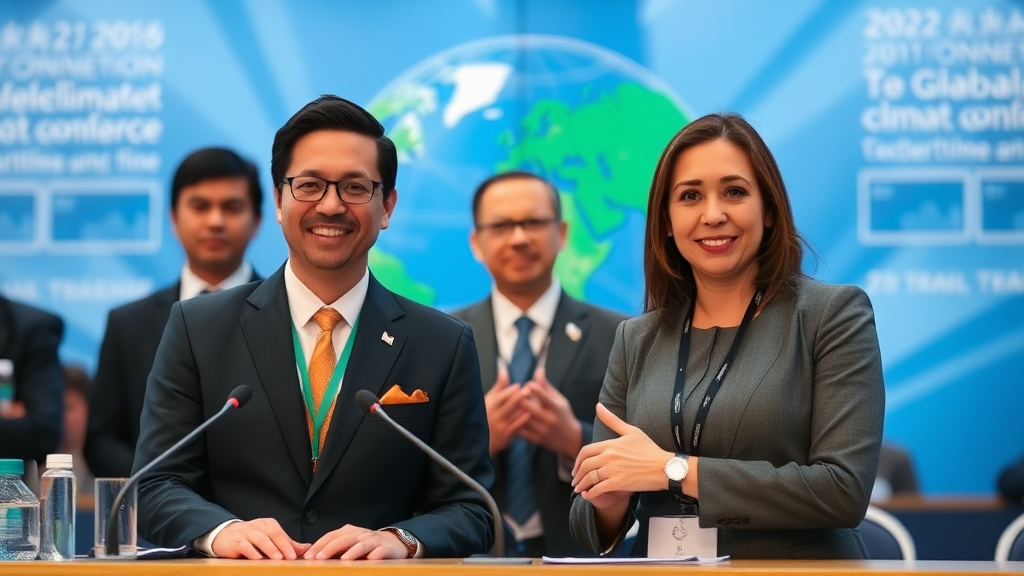
As severe climate events worsen with worldwide temperatures keep climbing, international leaders convene at the current climate conference to address an historic environmental challenge. This vital conference brings together nations committed to establishing firm commitments on carbon pollution, renewable energy transitions, and climate resilience measures. The consequences are more significant than ever as negotiators work on plans that will influence our world’s trajectory. Explore how worldwide collaboration and ambitious pledges are transforming worldwide efforts to environmental warming.
Environmental Emergency Reaches A Crucial Turning Point
Scientific evidence definitively indicates that our planet has reached a critical juncture in its climate trajectory. Global temperatures have climbed about 1.1 degrees Celsius since pre-industrial times, triggering cascading environmental consequences across all ecosystems. Melting ice caps, elevated ocean levels, and progressively worse weather patterns serve as clear warnings of the urgency surrounding climate action. The latest climate summit identifies these troubling patterns and stresses the need for immediate, decisive intervention to prevent irreversible damage to our planet’s delicate balance.
The intersection of environmental damage and economic and social challenges has generated an extraordinary challenge requiring international collaborative effort. Emerging economies face outsized effects from climatic shifts even though contributing minimally to historical emissions, emphasizing the need for equitable burden-sharing across countries. The gathering tackles these complex challenges by establishing mechanisms for technology transfer, climate-related funding, and sustainable growth programs. World leaders acknowledge that without transformative action during this crucial period, humanity stands to surpassing irreversible thresholds that could drastically change our societal direction and long-term viability.
International Cooperation and Regulatory Structure
The global climate conference marks a pivotal moment for establishing unified international policies that go beyond national boundaries. Countries involved recognize that climate change requires joint efforts, compelling countries to align their environmental standards and emission reduction targets. Delegates are negotiating detailed agreements that establish oversight systems, ensuring each nation fulfills its commitments. These collaborative efforts aim to establish enforceable agreements that propel substantial advancement toward global climate stabilization and sustainable development goals.
Effective policy frameworks developed at the summit stress collective accountability while honoring varying economic conditions across nations. The agreements being forged include provisions for financial support to developing countries, technology-sharing programs, and capability development initiatives. By setting measurable targets and tracking mechanisms, the international community improves its capability to measure advancement and adjust approaches as needed. This comprehensive approach acknowledges that tackling climate change requires both immediate action and enduring systemic support from all participating nations.
Solutions and Future Commitments
Renewable Energy Transition
The summit has catalyzed historic pledges to renewable energy expansion across member countries. Countries vowed to boost solar, wind, and hydroelectric capacity by 50% within the next decade, dramatically overhauling global energy infrastructure. These allocations reflect a collective effort to reduce carbon emissions while creating sustainable economic opportunities. Developed nations pledged significant funding to support emerging economies in their shift, recognizing that global climate action necessitates balanced collaboration and collective accountability for environmental renewal.
Emissions Reduction Goals and Responsibility
Delegates created binding carbon reduction targets requiring nations to achieve net-zero emissions by 2050, with interim checkpoints in 2030 and 2040. An autonomous oversight system will track progress openly, ensuring accountability across all participating countries. These binding obligations represent the most comprehensive environmental accord to date, with penalties for non-compliance and rewards for surpassing targets. The framework incorporates provisions for technology transfer and financial support, enabling developing nations to meet their obligations while sustaining economic expansion and social development.
Creating Resilience and Adaptability
Beyond emissions decreases, the summit highlighted adaptation approaches for climate resilience for at-risk communities and ecosystems confronting urgent challenges. Funding mechanisms were set up to support coastal communities, agricultural regions, and island nations confronting rising sea levels and shifting climate conditions. Investment in sustainable infrastructure, ecosystem restoration, and climate-resilient agriculture will safeguard economic security while reducing future climate-related damage. This holistic strategy recognizes that addressing climate change requires coordinated efforts on both mitigation and adaptation, ensuring no communities are left behind in our shared shift toward environmental sustainability.
